
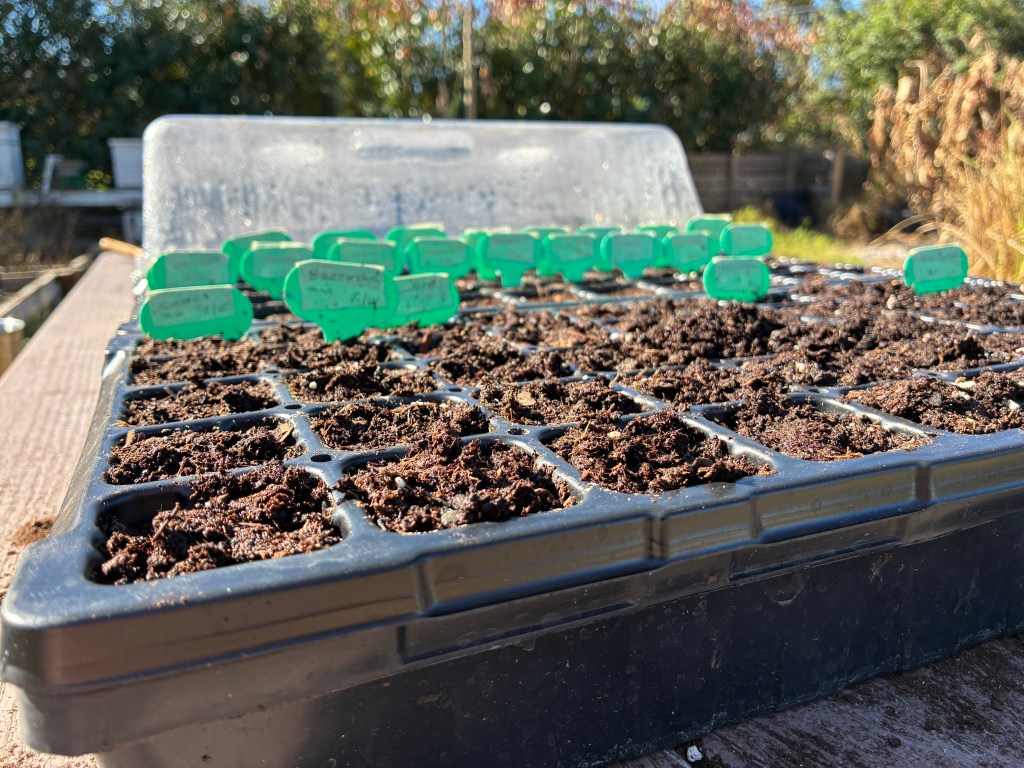
I recently seeded two 50-cell trays. Fifty cells each, multiple varieties, well over one hundred seeds total. I felt good about it. Same soil mix I’ve used before. Same indoor setup. Same general process I’ve followed many times.
Eight to ten days later, I had zero germination.
Not slow emergence. Not patchy performance. Nothing.
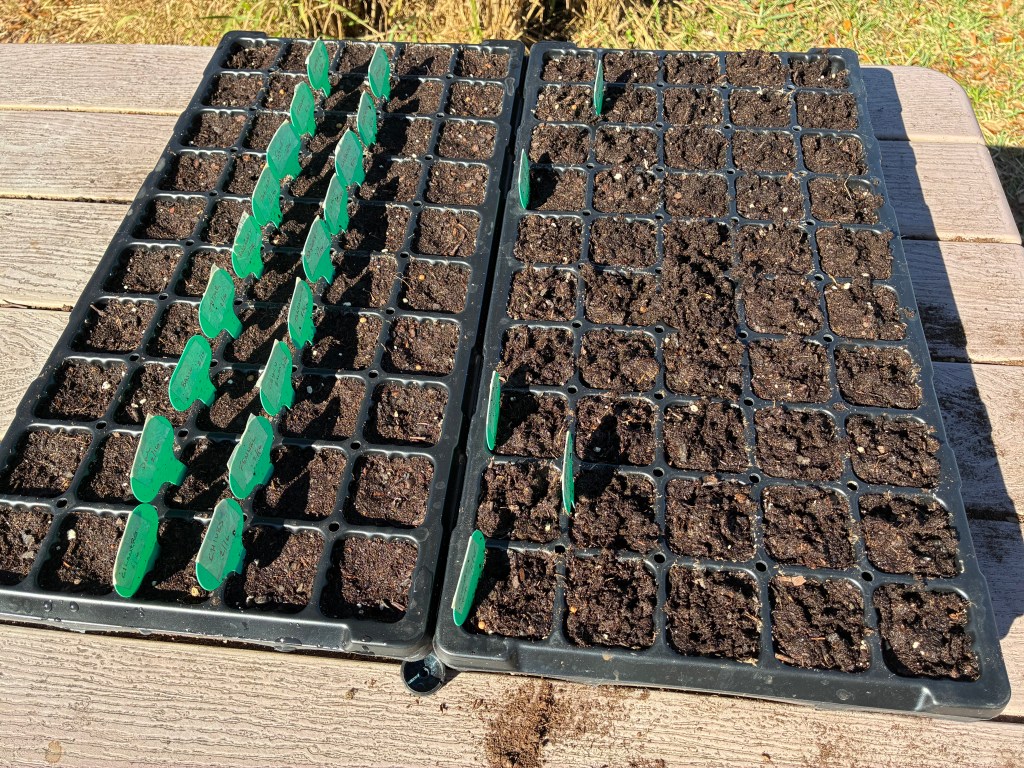
And when everything fails at once, it’s rarely the seeds. It’s the system. Or more accurately, it’s something I changed without realizing I changed it.
What made this more frustrating is that nothing seemed obviously wrong. There were no dramatic temperature swings. The trays weren’t sitting in visible standing water. I didn’t see mold overtaking the surface. It all looked normal from the outside. But cucumbers were in one of those trays. Cucumbers are not shy about germinating. Under reasonable conditions, they push up hard in three to five days. When a cucumber hasn’t shown itself after nine days, you don’t wait longer… you investigate.
So I dug in.
What I found told the whole story. The seed was swollen, which meant it had taken up water. But it wasn’t pushing a strong white taproot. The surrounding soil was dark, glossy, heavy. The texture looked matted and compressed, almost like wet peat that had collapsed into itself. It wasn’t fluffy. It wasn’t airy. It didn’t look like a medium that allowed oxygen to move through it.
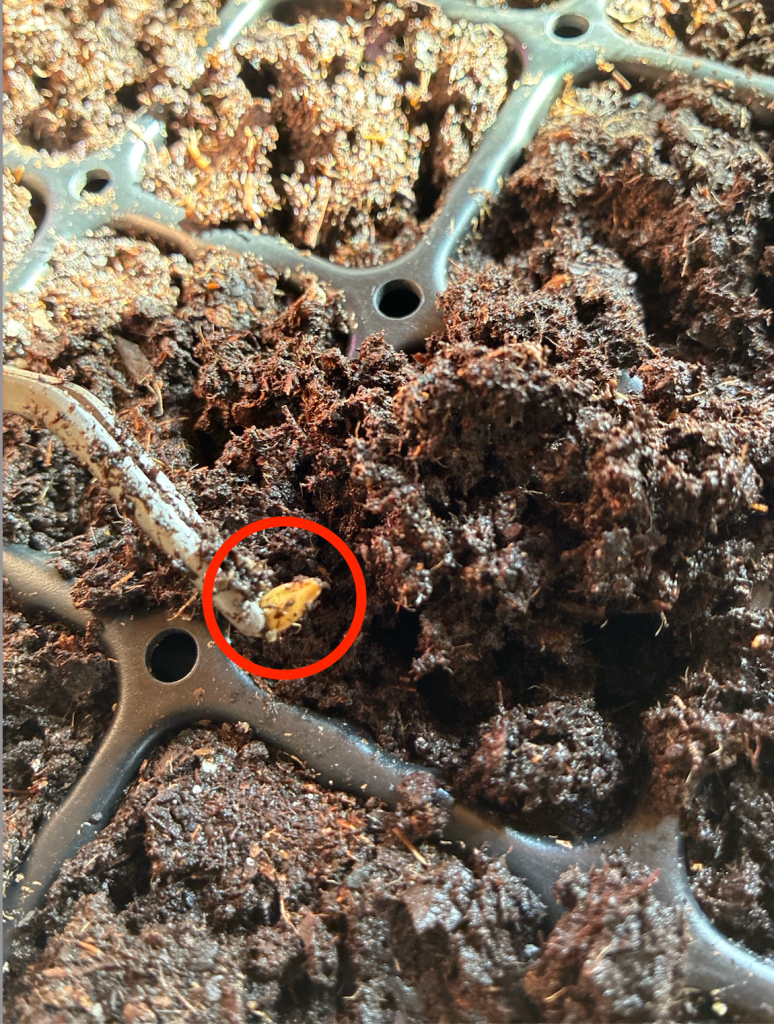
That’s when the problem was understood.
Seeds do not just need moisture. They need oxygen immediately after they hydrate. When a seed absorbs water, it activates. Metabolism starts. Respiration begins. If there isn’t oxygen available in that environment, the process stalls or worse, it begins to rot.
The key variable I had changed was tray size. I normally start seeds in 128-cell trays. Those dry quickly. They drain quickly. The soil column is shallow. It’s actually hard to keep them too wet for very long. This time I moved into 50-cell trays. The soil column was much deeper. Each cell held significantly more media. That means more water retention, slower evaporation, and less passive oxygen exchange.
And here’s the subtle part: I filled and packed the soil the same way I do with 128s. Probably even pressed it a little more firmly because the larger cells felt roomier. Then I bottom watered like I normally do.
In a 128-cell tray, that approach works because the excess moisture clears fast. In a 50-cell tray, that same behavior creates a heavier, wetter, more compacted column of soil that holds water longer than you think. The surface may not look flooded, but deeper down it can be saturated and oxygen-poor.
What likely happened is simple. The seeds absorbed water. The surrounding media stayed too wet. Oxygen diffusion slowed. The soil structure collapsed slightly under the weight of moisture and compaction. The seeds activated, but they didn’t have the air they needed to complete the process.
It wasn’t dramatic. It was quiet. And that’s what makes this kind of mistake easy to miss.
When you experience total failure across multiple species, the first step is not to blame the seed packet. It’s to dig. Carefully excavate a few seeds and really look at them. If they’re dry and hard, moisture was the issue. If they’re swollen and mushy in heavy soil, oxygen was likely the issue. If they’ve sprouted but can’t push upward, depth or crusting may be involved. The seed will tell you what happened if you’re willing to check.
Once I saw the condition of that cucumber seed and the surrounding soil, I knew trying to fluff the surface and reseed wasn’t the right move. When media has gone anaerobic, the structure has already shifted. Microbial balance changes. The lower half of the soil column remains heavy and oxygen-poor even if you loosen the top. At that point, time is more valuable than trying to salvage it.
So I dumped the trays and started over.
The adjustment going forward is simple but important. Larger cells behave more like small pots than plug trays. They hold moisture longer. They dry slower. They require less frequent watering than you think. When moving to larger cells, you cannot water the same way you do with smaller trays.
I’m now filling more loosely, tapping instead of pressing firmly, and making sure the pre-moistened mix feels like a wrung sponge — not wet, not glossy, not dense. After sowing, I water once to settle and then leave it alone until the surface lightens. I would rather let the media approach slightly dry than risk suffocating seeds again.
The broader lesson here is that even small system changes require behavioral changes. Switching tray size isn’t a minor detail. It changes drainage, evaporation, compaction dynamics, and oxygen flow. If you don’t consciously recalibrate, you end up repeating the old habit in a new context and the system responds differently.
Water alone is not life for a seed. Water plus oxygen is life.
Sometimes the only way to really internalize that is to lose a tray and pay attention to why.
 Grow Code Systems
Leave a comment